


On December 19, 2025, the China EV100, in partnership with Thailand’s Board of Investment, hosted the High-Level Roundtable on China-Thailand NEV Industry Cooperation at BOI’s Bangkok headquarters. The roundtable was co-chaired by Narit Therdsteerasukdi, BOI Secretary-General, and Zhang Yongwei, Chairman of China EV100 and Executive Chairman of GREEM.
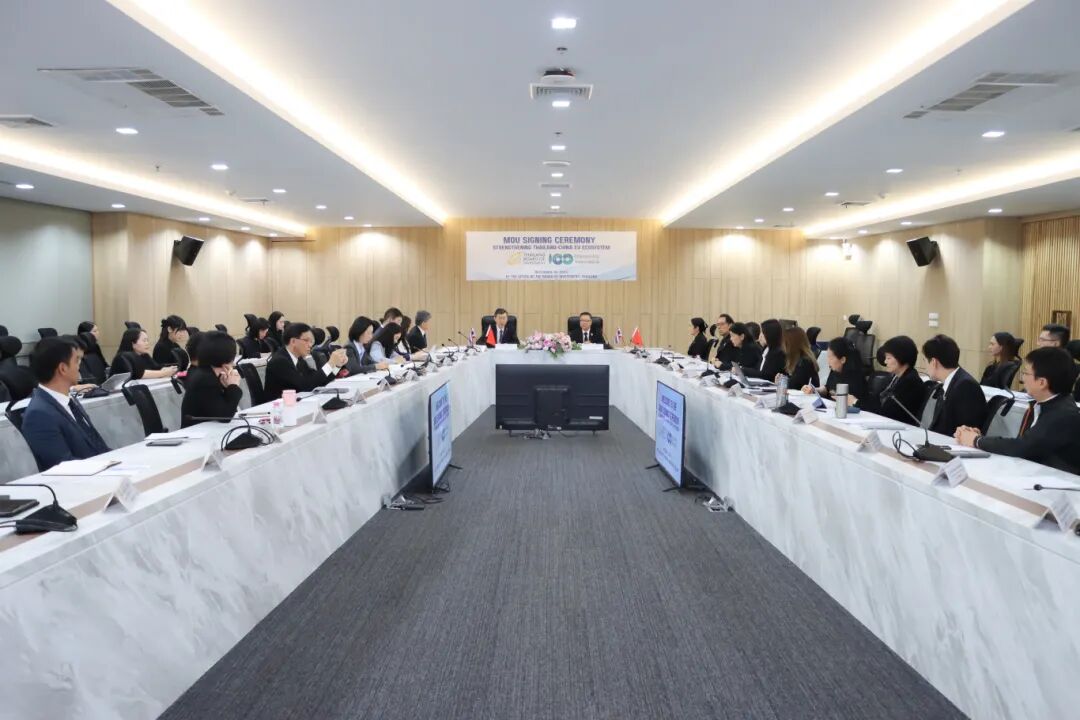
The event gathered representatives from Thailand’s National Electric Vehicle Policy Committee and core EV industry bodies. Participants included officials from the Ministry of Industry’s Office of Industrial Economics (OIE), the Ministry of Finance’s Excise Department (EXD), the Energy Policy and Planning Office (EPPO), Thailand Automotive Institute (TAI), Federation of Thai Industries (FTI), Electric Vehicle Association of Thailand (EVAT), Thailand Automotive Industry Association (TAIA), Thailand Subcontracting Promotion Association, relevant BOI departments. Attendees discussed core topics such as China-Thailand policy coordination, industrial chain integration, innovative cooperation models, and ecosystem co-development.
01 Policy Exchange Lays Solid Ground for Cooperation
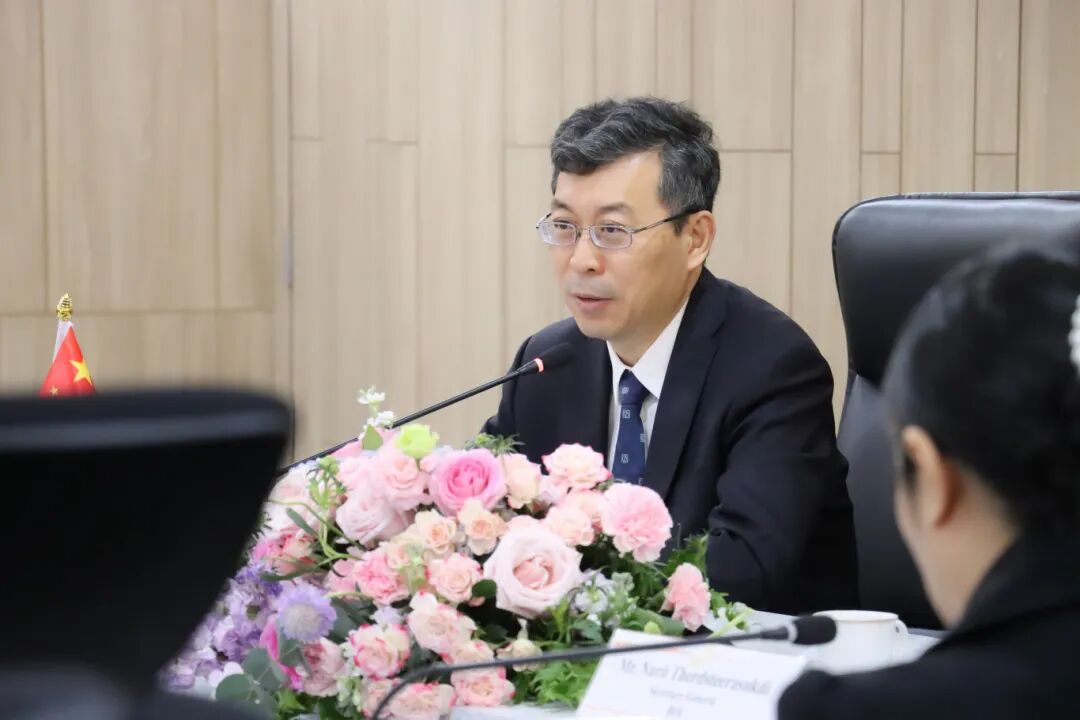
Zhang Yongwei offered an overview of the latest trends in China’s NEV industry. Through years of development, China has built a complete NEV industrial chain, accumulating rich experience in technology R&D, product manufacturing, and market application, along with a comprehensive policy system supporting industrial innovation and overseas expansion.
Thai institutions outlined the country’s NEV development policies and supporting systems. As the lead industrial authority, the Ministry of Industry shared plans to optimize industrial planning and upgrade infrastructure to foster NEV industry clusters. The EXD highlighted tax incentives—including corporate income tax reductions and imported equipment exemptions—to lower enterprise investment and operational costs. The TAI committed to providing professional services such as technical testing, standard setting, and certification support. The EPPO updated on energy infrastructure progress, covering charging station deployment, power supply security, and clean energy adoption.
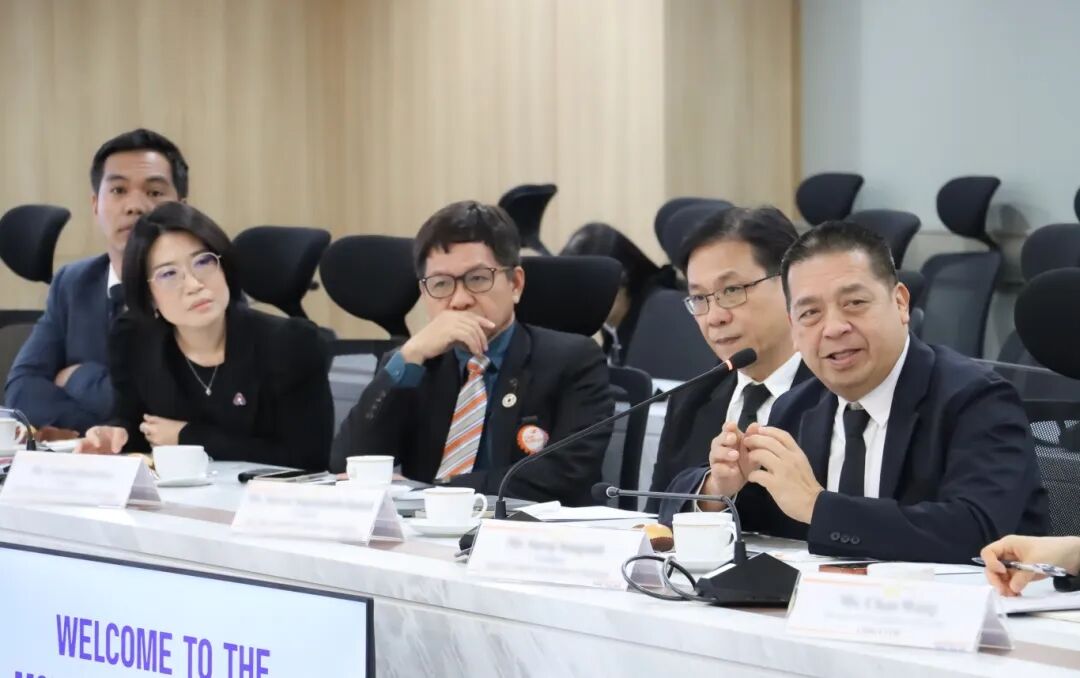
The exchange greatly deepened mutual understanding of each other’s industrial strengths and development paths, laying a foundational cognitive basis for future cooperation.
02 Pragmatic Discussions Deepen Consensus for Industrial Cooperation
During discussions on practical matters, representatives from both sides exchanged in-depth views on supply chain localization, software and service adaptation, market competition norms, and cross-border standard mutual recognition.
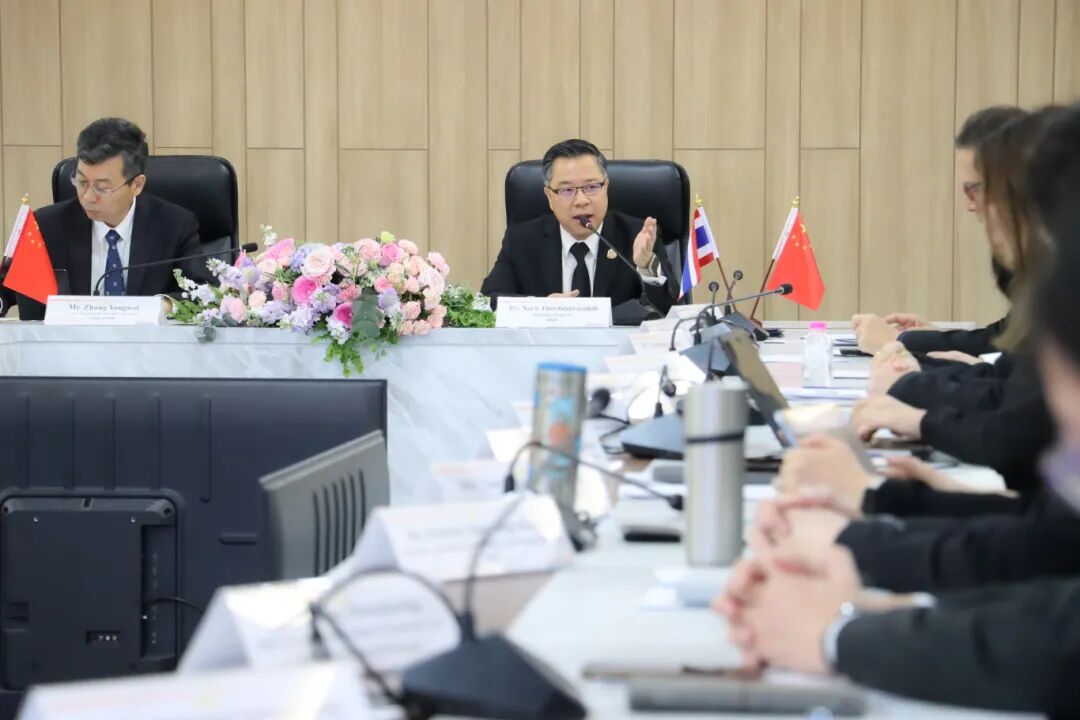
Both parties agreed that industrial chain localization is a key path to cost reduction and efficiency improvement. Ensuring a healthy market competition order is fundamental to sustainable industrial development, while joint standard-setting and energy synergy are key to removing collaboration barriers and achieving long-term growth. Moving forward, both sides will promote China-Thailand NEV cooperation centered on supply chain localization, market order maintenance, joint development of standards and testing/certification systems, and energy coordination.
This high-level roundtable set up a regular dialogue mechanism for the China-Thailand NEV industry and clarify the next phase of cooperation. Building on this meeting, relevant institutions from both countries will organize a series of follow-up matchmaking, exchange, and dialogue activities. These initiatives seek to jointly promote in-depth China-Thailand NEV collaboration, offering a replicable model for global NEV cross-border cooperation and supporting the global automotive industry’s green, low-carbon transition.


