


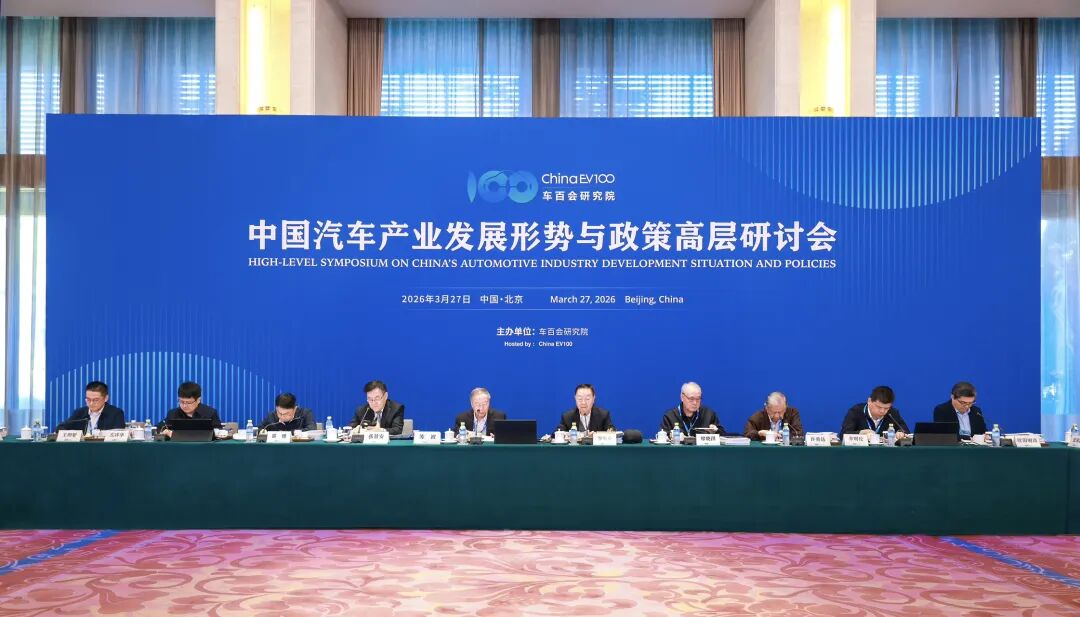
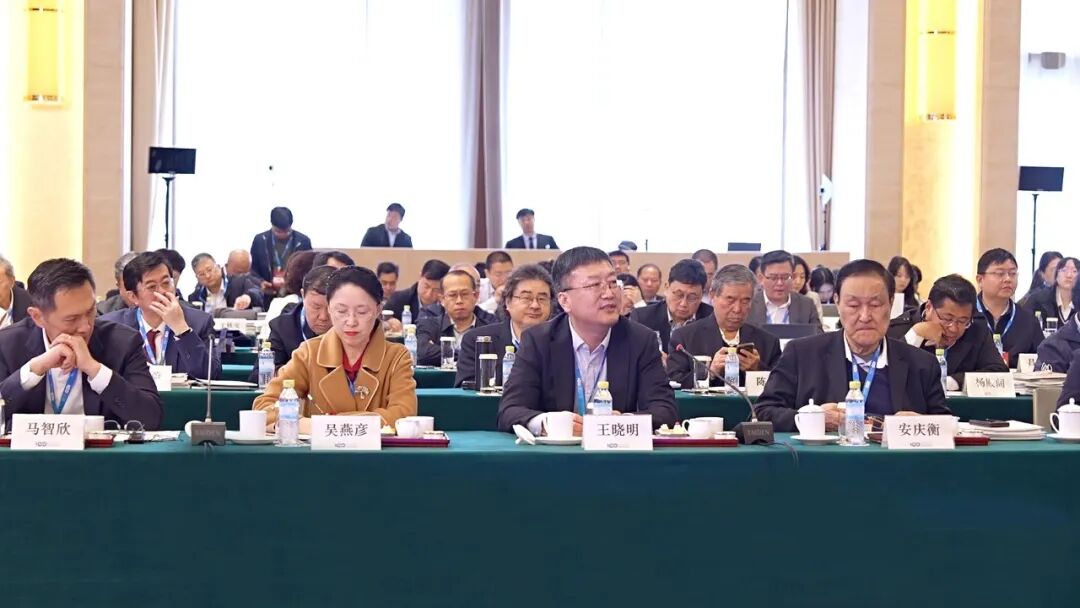
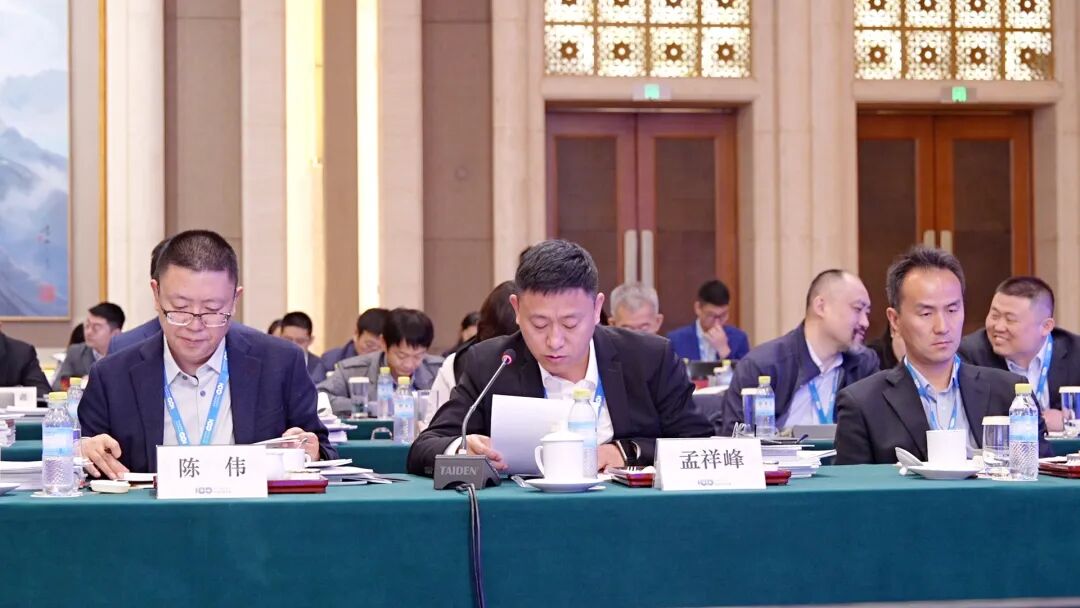
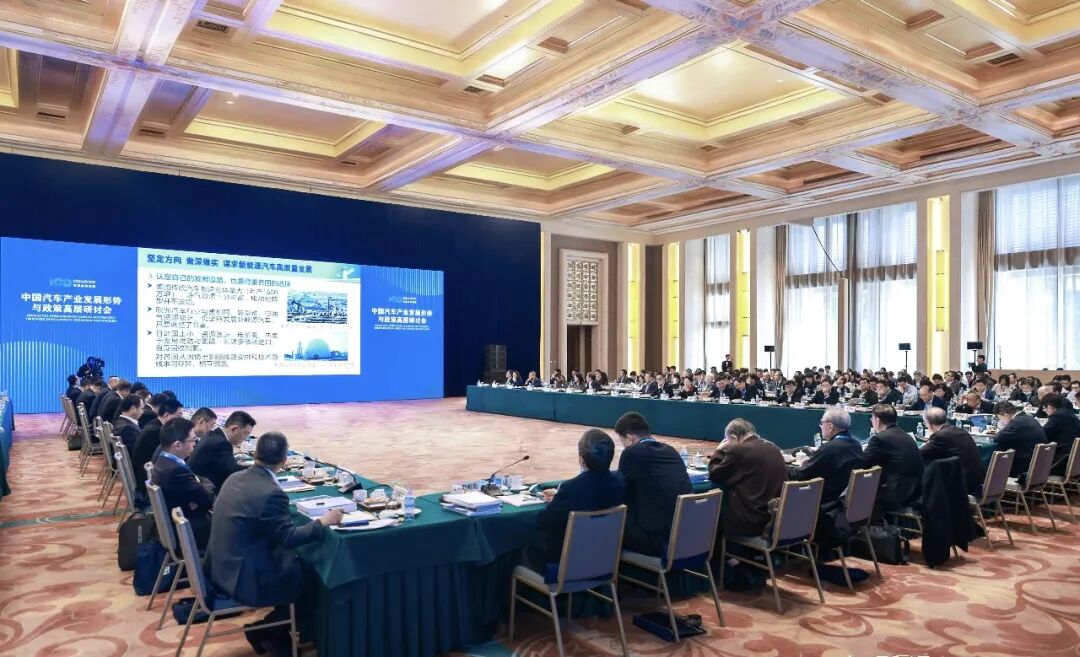
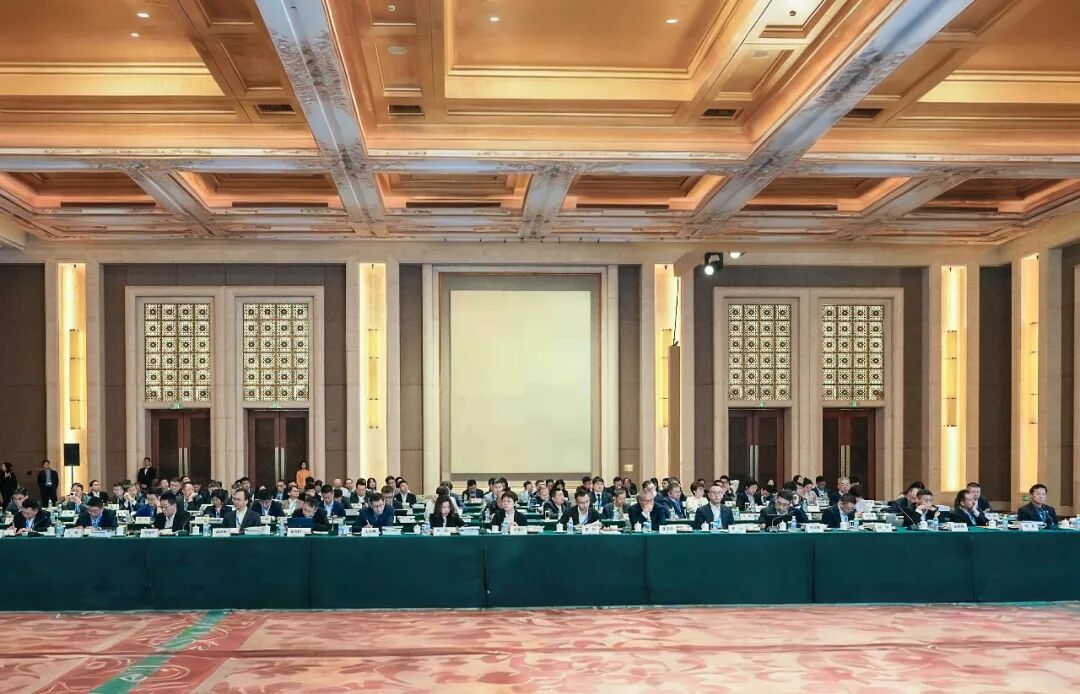
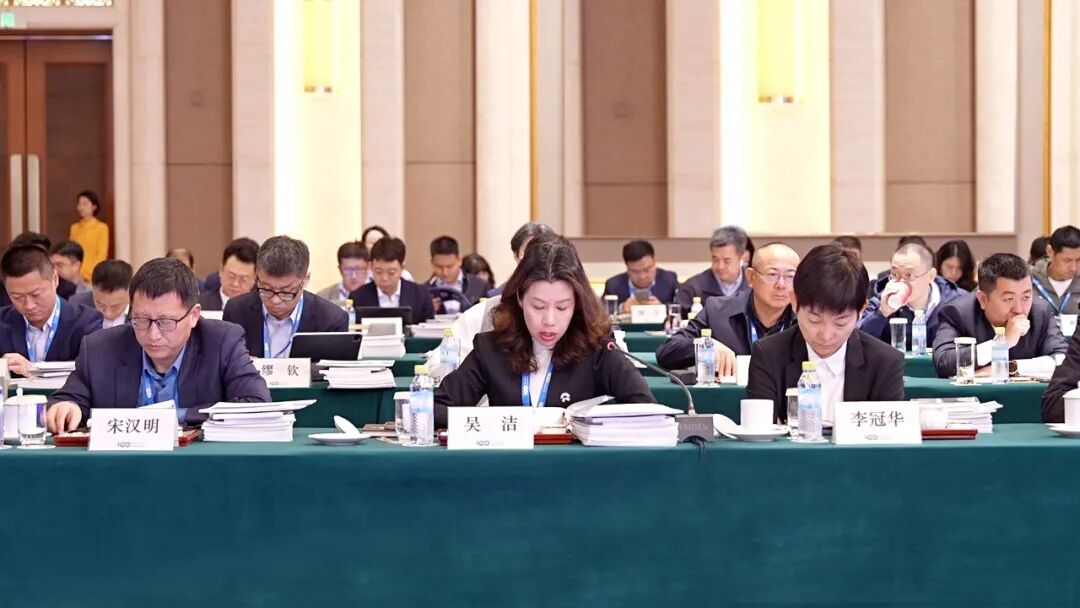
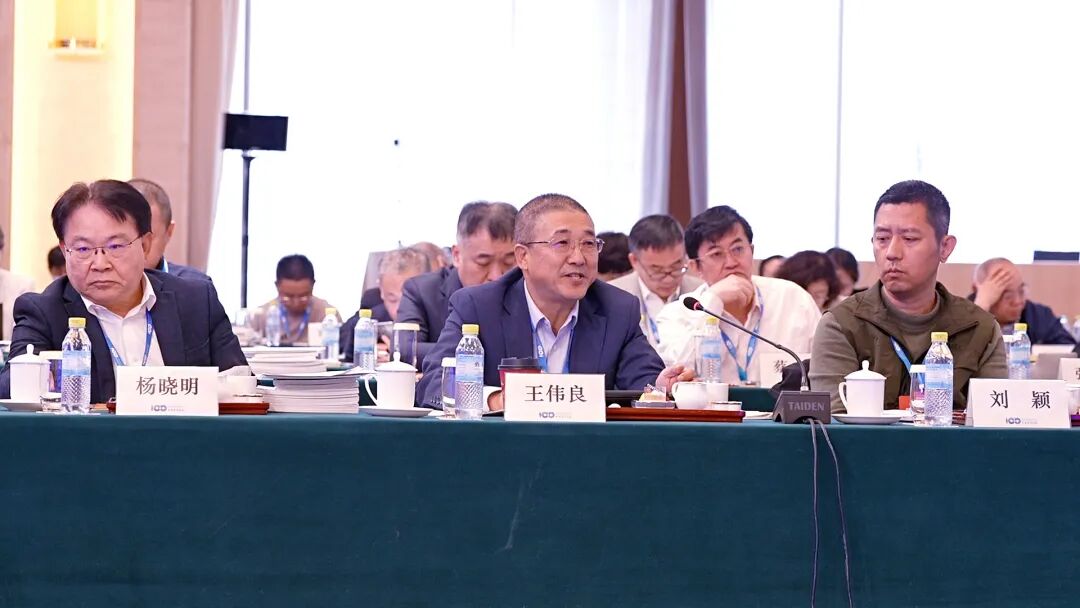
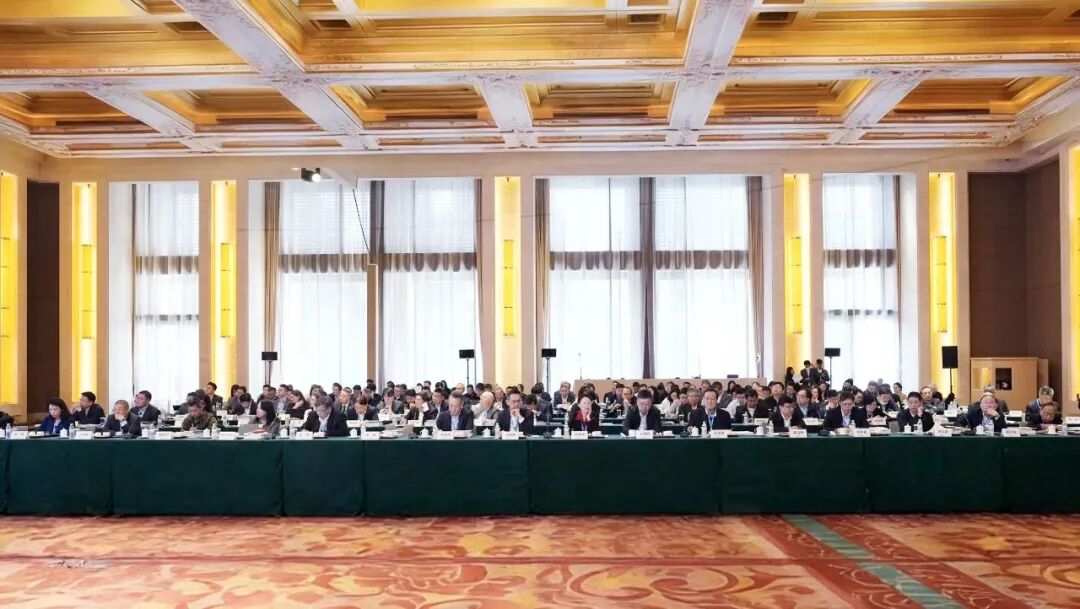
On the eve of the High-Level Forum on the Development of Intelligent Electric Vehicles (2026), the High-Level Symposium on China’s Automotive Industry Development Trends and Policies, organized by China EV100, was held in Beijing on March 27, 2026. The conference brought together leaders from relevant government departments, academicians and experts from institutions such as the Chinese Academy of Engineering (CAE), the Chinese Academy of Sciences (CAS), the China Federation of Industrial Economics (CFIE), the Development Research Center of the State Council (DRC), the China Automotive Technology and Research Center (CATARC), the China Automotive Engineering Research Institute (CAERI), and the China Automotive Industry Advisory Committee(CAIAC), as well as representatives from FAW Group, Dongfeng Motor Corporation, Changan Automobile, Guangzhou Automobile Group (GAC Group) , Beijing Automotive Group (BAIC Group), Chery Automobile, Jianghuai Automobile Group (JAC Group), BYD, Geely Automobile Holdings, Great Wall Motor, Volkswagen Group, Bayerische Motoren Werke AG(BMW Group), Tesla, Volvo Group, Nissan Motor, Honda Motor, General Motors, Hyundai Motor, Seres Group, NIO, Li Auto, Shandong Heavy Industry Group, Yutong Bus, Daimler Truck AG, Sany Heavy Industry, and Deepway; as well as suppliers including Robert Bosch GmbH, Magna International, Aptiv PLC, FORVIA HELLA, BorgWarner, Autoliv, Analog Devices (ADI), Infineon Technologies, Contemporary Amperex Technology (CATL), ChenZhi Group, Zhixin Technology, Huawei Digital Power Technologies, Gotion High-tech, Desay SV Automotive, Tianma Microelectronics, Yingwang, Horizon Robotics, Momenta, Black Sesame Technologies, Qcraft, DeepRoute.ai, SemiDrive, NOVOSENSE Microelectronics, AXERA, Alibaba Cloud, Baidu Group, Kyocera Corporation, Lingchong, PPG Industries, ZTE Corporation, China Unicom Intelligent Network, MANN+HUMMEL Group, PH Foundational Software, Neusoft Reach, Didi Autonomous Driving, JD.com, Feishu, Xiaohongshu, Kingfa Sci. & Tech., Neolix, and other supply chain and technology companies—with approximately 260 corporate representatives—engaged in a day-long, high-quality seminar focusing on multiple core topics, including industry positioning, technological innovation, supply chain security, new industrial models, consumer policies, international development, and industrial management systems. (The above organizations are listed in no particular order.)
The seminar was divided into morning and afternoon sessions, adopting a format that combined keynote speeches with thematic discussions. The morning session was chaired by Ouyang Minggao, an academician of the Chinese Academy of Sciences, while the afternoon session was chaired by Zhang Yongwei, Chairman of the China EV100.
Topic 1: Macroeconomics and the Automotive Industry
Focusing on the main development theme of the 15th Five-Year Plan, participants agreed that new energy vehicles have become a vital vehicle for new-quality productive forces and a key driver for energy transition and industrial upgrading. From a national perspective, driving the automotive sector’s transition from “oil-dominated” to “electricity-dominated” is a crucial means of reducing reliance on foreign energy and achieving the “dual carbon” goals. Against the backdrop of diverging technological pathways among major global economies, China must adhere to its own development path while strengthening international exchange and cooperation to build a more stable external environment. The next decade will mark a critical phase for new energy vehicles, shifting from “stabilizing scale” to “enhancing quality.”
The conference further noted that the 15th Five-Year Plan period is the decisive stage for China’s transition from a major automotive nation to a leading automotive power. It was recommended that intelligent and connected new energy vehicles be integrated into the broader strategic framework encompassing the manufacturing powerhouse initiative, the energy revolution, the digital economy, and national security. A higher-level, cross-departmental and cross-regional coordination mechanism should be established to ensure coordinated advancement. Additionally, it was suggested that a development plan for intelligent and connected new energy vehicles be formulated for the 15th Five-Year Plan period to provide long-term, stable expectations for the market, enterprises, and capital.
Regarding the assessment of the industry’s development stage, attendees noted that the sector has entered a transition period from “scale expansion” to “high-quality development.” This requires further strengthening of top-level design and strategic guidance, enhancing the continuity and stability of policies, and improving the modern industrial governance system.
Topic 2: Evolutionary Directions and Implementation Pathways for Major Cutting-Edge Technologies in the Automotive Industry
Regarding power battery technology, the industrialization of solid-state batteries has entered a critical phase. Numerous challenges remain between pilot production, large-scale vehicle integration, and stable application. Technological breakthroughs require not only material optimization but also coordinated design across the entire logical chain—from user needs to vehicle performance metrics—to drive the systematic development of core indicators such as range, lifespan, charging efficiency, environmental adaptability, and safety. At the same time, liquid and solid-state batteries are not mutually exclusive; rather, they should form a complementary technological matrix to provide diversified solutions for new energy vehicles.
In terms of intelligentization, the next phase of competition in the automotive industry will center on autonomous driving. Intelligent driving has evolved into a comprehensive competition involving the application of artificial intelligence in the automotive sector, encompassing the synergy of computing power, algorithms, data, and infrastructure. Participants recommended promoting the coordinated development of use cases, regulations, and infrastructure to enhance system reliability, the traceability of accident liability, and the completeness of standards systems, thereby providing both technical and institutional support for the large-scale implementation of intelligent driving. They also advocated for supporting the high-quality global expansion of automotive intelligence and encouraged enterprises with strong innovation capabilities in areas such as intelligent driving, smart cockpits, and intelligent chassis to pursue overseas development.
Topic 3: Building a Secure and Resilient Supply Chain System
It was noted at the meeting that the global automotive supply chain is undergoing systemic and long-term restructuring. International trade protectionism and technological barriers have raised the global entry threshold for China’s supply chain, while the domestic industry also faces challenges in securing new production factors such as computing power and high-quality data. Supply chain risks have evolved from shortages of individual components to systemic, multi-dimensional challenges across the entire chain, with significant shortcomings still existing in high-end segments, core components, and intelligent computing power. Participants suggested coordinated efforts in the following four areas to ensure supply chain security and resilience:
First, promote self-reliance and control over core technologies. Accelerate breakthroughs in key areas such as automotive-grade chips, foundational software, and high-end materials; establish a full-chain support system for domestically produced high-performance AI chips; and simultaneously build a strategic reserve mechanism for critical raw materials to stabilize upstream supply.
Second, establish a full-chain risk prevention and control mechanism. Create a national-level supply chain risk monitoring and early warning platform, and establish industry-level emergency reserves for high-risk categories.
Third, innovate global cooperation models. Build a mutually beneficial global cooperation model to promote international exchange of core technologies and supply chain capabilities. Deepen overseas localization efforts and closely align with overseas regulations and market demands.
Fourth, promote cross-sector reuse of supply chains. Encourage the extension of core components into related fields such as embodied intelligence, the low-altitude economy, and new energy storage, using large-scale, multi-scenario applications to accelerate technological iteration.
Topic 4: Building a New Model for a Healthy and Sustainable Automotive Industry
The new energy vehicle industry has entered a new phase of high-quality development. Regarding how the industry can form a new development model, participants suggested shifting from homogenized competition to value creation. The core approach involves adopting a user-centric strategy driven by high standards, developing products across five dimensions: high safety, high reliability, high performance, high quality, and high value; advancing platform-based and standardized development to reduce redundant investment and allocate resources toward innovation rather than internal friction; and extending from manufacturing into services to build a standardized, digital after-sales service system. Meanwhile, the conference emphasized that the development of new energy vehicles has entered an era of ecosystem competition, where collaboration and ecosystem-wide win-win outcomes have become a strategic necessity.
Topic 5: Pathways and Policy Framework for Further Stabilizing Automobile Consumption The meeting noted that stabilizing automobile consumption requires efforts across multiple dimensions, including policy optimization, the usage environment, and aftermarket services.
Regarding policy optimization, the meeting proposed studying the gradual shift of consumption tax from the production stage to the retail stage, while adjusting the profit-sharing mechanism between the central and local governments to enhance local governments’ enthusiasm for promoting new energy vehicle consumption and infrastructure development.
Regarding the improvement of the usage environment, efforts must continue to optimize the layout of charging infrastructure and promote the large-scale application of vehicle-grid interaction. In the next phase, the focus of charging facility construction will shift from “scale expansion” to “quality enhancement,” addressing weaknesses in urban fast-charging, highway, and rural areas, improving operational service quality, and strengthening management and safety systems.
Regarding aftermarket services, efforts should be made to standardize and digitize after-sales service systems, encourage the integration of manufacturing and services, foster new business models in the aftermarket, unlock consumption potential, and alleviate issues such as the significant shortage of skilled technicians.
Topic 6: Policy Framework Supporting the High-Level Internationalization of the Automotive Industry
It was proposed at the meeting that accelerating internationalization is the inevitable path for China to become a leading automotive power. Recommendations include promoting the industry’s transition from product exports to the global expansion of industrial chains and ecosystems, shifting from merely “going out” to “integrating into” global markets, and establishing a comprehensive export model encompassing “complete vehicles + core components + services + technology + standards.”
First, leveraging the leadership of leading enterprises to promote the coordinated layout of “complete vehicles + supply chains + services”; second, establishing more effective collaboration models and forming overseas enterprise alliances to avoid internal disorderly competition; third, achieving localized production and innovative cooperation models to drive the transformation of the industrial chain from “Made in China” to “Global Operations”; and fourth, strengthening top-level design to form a comprehensive system covering financial policies, market safeguards, mutual recognition of standards, and cross-border data flow.
Topic 7: Support System for Multinational Enterprises’ Development in China
In light of the profound changes in China’s automotive industry landscape, the meeting also offered recommendations on how multinational enterprises can further develop in China. First, promote the harmonization of domestic and international standards and regulations, encourage foreign-invested enterprises to participate in the formulation of relevant standards, and achieve mutual recognition of standards; second, optimize cross-border data processes to ensure efficient and compliant data flow while safeguarding security; third, encourage multinational enterprises to engage in technological and product innovation based on local needs. All parties expressed their commitment to further deepening localization strategies, engaging in open cooperation with Chinese partners, and jointly building a secure, stable, and efficient global supply chain system.
Topic 8: Management Systems and Policies for Adapting to Technological Innovation
In response to industry development needs, the meeting proposed several recommendations for optimizing policies and the business environment. For example, improving the business environment, removing hidden barriers, upgrading regulatory processes, and establishing an intelligent data circulation supervision platform. Improving the usage and service environment involves accelerating the development of charging and battery-swapping infrastructure and the aftermarket system, as well as expediting the formulation of unified standards for battery swapping; guiding certain enterprises to transition toward automotive aftermarket services; and providing a more robust policy environment for related business model and application scenario innovations. To meet the demands of technological innovation, management systems and policies must be refined to achieve institutional breakthroughs in areas such as traffic safety, data governance, and insurance mechanisms.
Topic 9: New Approaches and Directions for Automotive Governance in the New Era
In this new era, optimizing the automotive industry governance system and regulating the competitive order of the automotive industry are of paramount importance. It was proposed at the meeting that addressing disorderly competition in the automotive industry requires a combination of market mechanisms and legal regulations. On the one hand, promote corporate mergers and reorganizations to optimize industrial organizational structures and increase market concentration; on the other hand, accelerate the improvement of the standards system, using standard upgrades to lead the industry’s shift from price competition to competition based on technology, quality, and brand. At the same time, competition order must be regulated in accordance with the law to combat false advertising and price violations; Furthermore, efforts must be made to prevent the “spillover of domestic competition,” guide enterprises to expand overseas in an orderly manner, safeguard the international image of “Made in China,” and ultimately achieve a fundamental shift in the industry from price-based competition to high-quality development.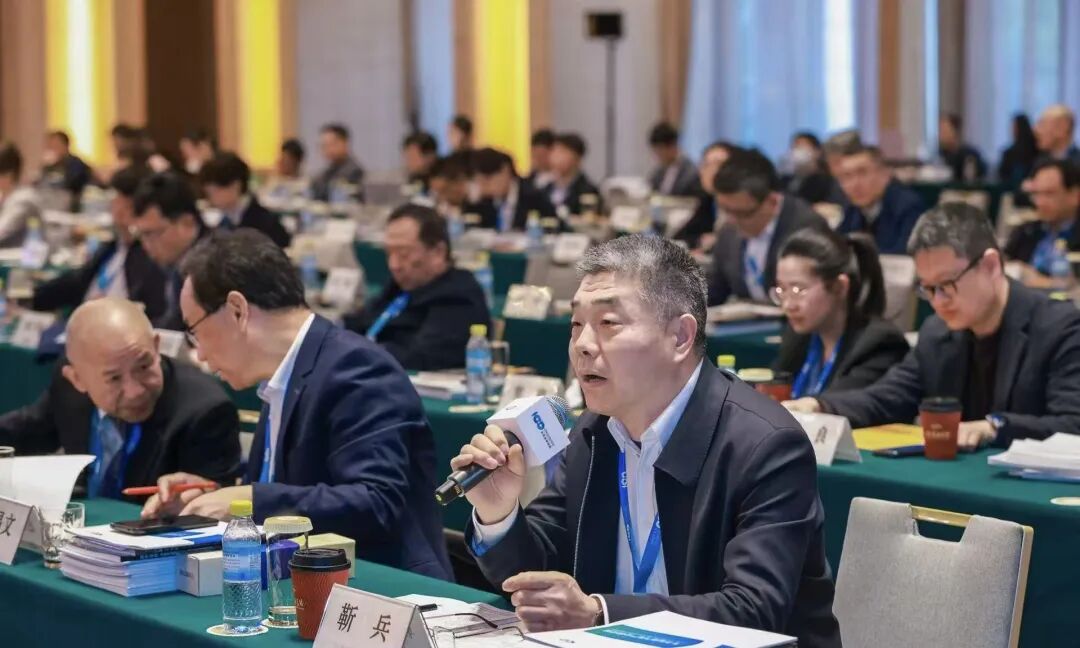
Through a day of in-depth discussions, the conference generated numerous forward-looking, constructive, and actionable ideas and recommendations, providing valuable references and guidance for government departments in formulating relevant policies, for industry enterprises in adjusting their development strategies, and for collaborative innovation across the entire industrial chain. Participants look forward to more high-quality exchange platforms in the future to jointly promote the high-quality, healthy, and sustainable development of China’s automotive industry.
The High-Level Forum on Intelligent Electric Vehicle Development (2026), themed “Promoting the Intelligent, Green, Integrated, and International Development of New Energy Vehicles,” will be held on April 11–12 at the China National Convention Center. Representatives from the automotive, energy, transportation, urban planning, telecommunications, and artificial intelligence sectors will be invited to engage in further in-depth discussions on hot topics within the industry.
📢 Registration is now officially open! Follow the forum’s official WeChat account to access the registration link with a single click, secure your spot, and stay updated on the latest forum developments.


