


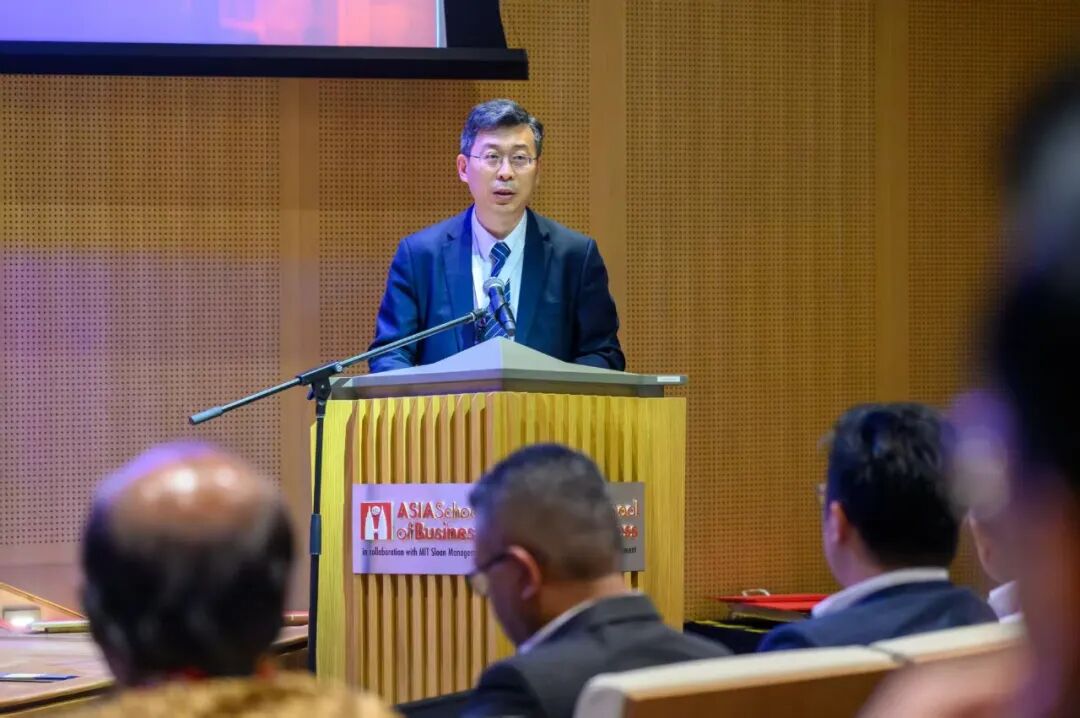
On May 12, the EV, Battery and New Energy Talent Development and Innovation Forum, jointly organized by China EV100, the Global Renewable Energy and Electric Mobility (GREEM) and Singtis EdTech Group, was successfully held at the Asia School of Business in Kuala Lumpur. The forum was officially supported by the National TVET Council of Malaysia (MTVET) and brought together nearly 200 high-level delegates from government, industry, academia, research and finance across China and Malaysia.
In his keynote address, Ahmad Zahid Hamidi, Malaysia’s Deputy Prime Minister and Minister of Rural and Regional Development, noted that the global industry is undergoing a structural reshaping driven by AI and the clean energy transition, with the EV and new energy industry emerging as a new growth pole connecting R&D, manufacturing, semiconductors, energy storage and infrastructure — the full value chain. Zahid stressed that the ultimate core competitiveness in this global industrial race is human capital. He further noted that China has been Malaysia’s largest trading partner for many years running, and the two sides are now moving beyond trade in goods to become strategic partners in building the industries of the future.
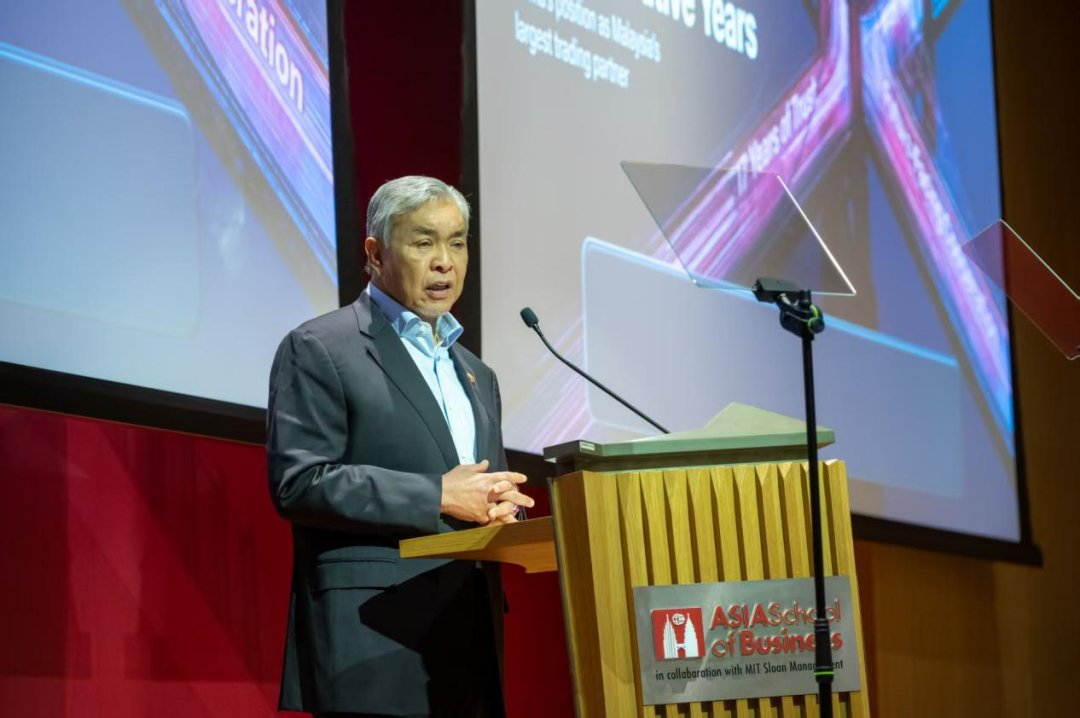
Leveraging Malaysia’s central position in ASEAN, its continuously improving industrial base and its labor force, Zahid welcomed the mature technology, industrial capabilities and investment from China’s NEV and new energy sectors. He also said that Malaysia would concurrently advance systemic reform of its vocational education system, promoting deeper industry engagement in talent development to ensure that skills training meets the real needs of industrial development.
Witnessed by Zahid and Ouyang Yujing, China’s Ambassador to Malaysia, the forum saw the inauguration of the Malaysia-China Green and Smart Mobility Cooperation Hub, as well as the signing of cooperation agreements with two partners: the Malaysia Zero Emission Vehicle Association (MyZEVA) and the Electric Vehicle Association of Malaysia (EVAM). The forum also marked the official launch of the cooperation hub’s first flagship initiative—the Malaysia-China EV Industry Talent Flagship Program.
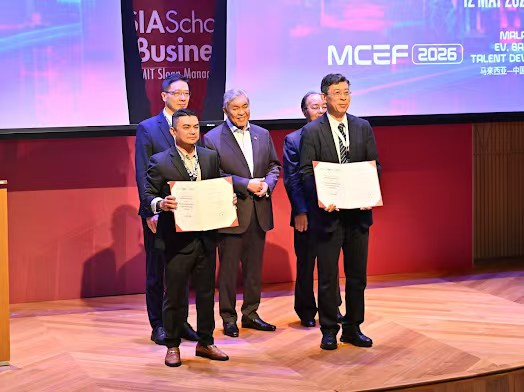
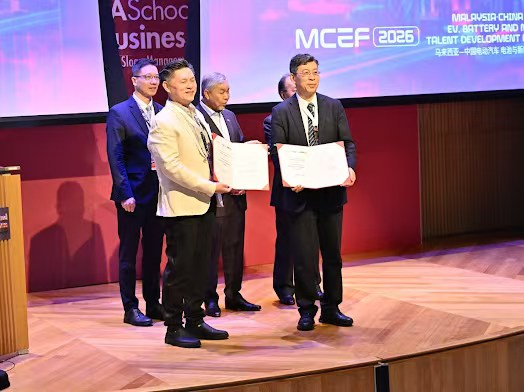
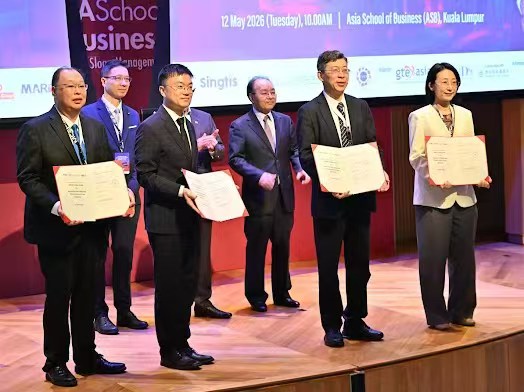
As GREEM’s core hub extending its global service network to Southeast Asia, the Malaysia-China Green and Smart Mobility Cooperation Hub will provide Chinese enterprises expanding overseas with five one-stop services: policy coordination and empowerment, industrial resource matchmaking, think tank research support, talent development and capacity building, and global brand promotion — addressing the core pain points of Chinese companies’ localization in Malaysia through full-chain solutions. The EV Industry Talent Flagship Program, as the hub‘s first initiative, aims to nurture 10,000 highly skilled local talents meeting global industry standards over five years in the fields of EV technology, battery manufacturing, energy storage systems and smart mobility, fundamentally addressing the talent gaps faced by Chinese-invested companies establishing operations in Malaysia.
In his keynote speech, Zhang Yongwei, Chairman of China EV100 Think Tank, systematically shared the latest developments and trends in China’s automotive industry. He noted that the global electric and smart mobility transformation is accelerating, reshaping not just the automotive industry itself but driving the transformation and upgrading of the entire industrial value chain. As a core hub in ASEAN, Malaysia is a key strategic pivot for Chinese enterprises expanding into Southeast Asia. He highlighted that China has developed a sustainable development model deeply integrating EVs, green energy and mobility services. Over the next five years, the internationalization of China’s automotive industry will achieve mutual benefits through deep integration into the global industrial system across four key areas: technology, markets, manufacturing and aftermarket services. The next-generation batteries, high-level autonomous driving and diversified global expansion strategies will be three key trends in this process. The Malaysia-China Green and Smart Mobility Cooperation Hub and its Talent Flagship Program launched at this forum exemplify the concrete actions taken to implement the above vision of global cooperation.
In the panel discussion, participants engaged in in-depth exchanges on talent development pain points in the context of the industry’s green and smart transformation. Muhammad Nizam bin Ahmad, Senior Representative of the Secretariat of the National TVET Council of Malaysia (MTVET), noted that Malaysia’s existing vocational education system faces challenges such as outdated curricula and social perception biases. He explained that the country had launched a national TVET reform in 2024, and plans to establish a task force by 2027 led by the Deputy Prime Minister to drive the system’s transformation and build a new talent development system aligned with industrial transformation. SIT Fung, Head of the Global Partnerships and Programs Office at UNESCO’s International Centre for Higher Education Innovation under the auspices of UNESCO, shared an AI-driven teacher capacity building initiative that would offer AI+NEV micro-certification courses and pilot a six-to-seven-month program in Malaysia, combining expertise from Chinese and Malaysian industries and academic institutions to develop professionals aligned with industry needs. Mohd Razif bin Abd Halim, President of the Malaysia Zero Emission Vehicle Association (MyZEVA), pointed out that Malaysia‘s new energy industry currently faces a circular predicament “small market size — limited incentive for institutions to expand EV-related courses —insufficient talent restricting market growth”and stressed that strategic initiatives such as the 10,000-talent flagship program are urgently needed to drive the coordinated development of both industry and talent.
In the roundtable discussion, experts and scholars from education authorities, vocational colleges and international business schools in both countries engaged in in-depth dialogue on topics including policy coordination for the NEV industry, mechanisms for industry-education integration and pathways for developing cross-border skilled talent. They proposed recommendations on mutual recognition of talent standards and the joint establishment of training facilities, aiming to provide talent support for the region’s sustainable industrial development.
This forum offers a new platform for deepening industrial co-development and joint talent cultivation between the two countries. As a core hub of China EV100 and GREEM in supporting Chinese enterprises’ expansion into Southeast Asia, the Malaysia-China Green and Smart Mobility Cooperation Hub will continue to connect resources across government, industry and academia in China and Malaysia, providing full-chain services — policy coordination, industrial matchmaking, think tank research and brand promotion — for Chinese enterprises expanding overseas, supporting their deep integration into Malaysia’s and ASEAN’s new energy industry ecosystem and enabling them to share the dividends of regional growth.


