


On the afternoon of February 27, the symposium was held at the Aptiv office in Jiading, Shanghai. Zhang Yongwei, Chairman of China EV100 and President of GREEM, attended and delivered a concluding speech, while Shi Jianhua, Vice Chairman of China EV100 and Dean of EV100 Plus, presided over the event.
Representatives from Aptiv, Valeo, Infineon, Forvia Hella, Autoliv and Eldor Group participated in the symposium. Attendees held in-depth discussions on key topics, including new collaboration models for multinational auto parts enterprises with Chinese automakers in global development, the ways for enterprises to capitalize on the strengths of China’s local supply chain to adjust their strategic positioning and reshape the global market landscape, and the means to further leverage their inherent international advantages in international standards, testing, certification, marketing and other related areas.
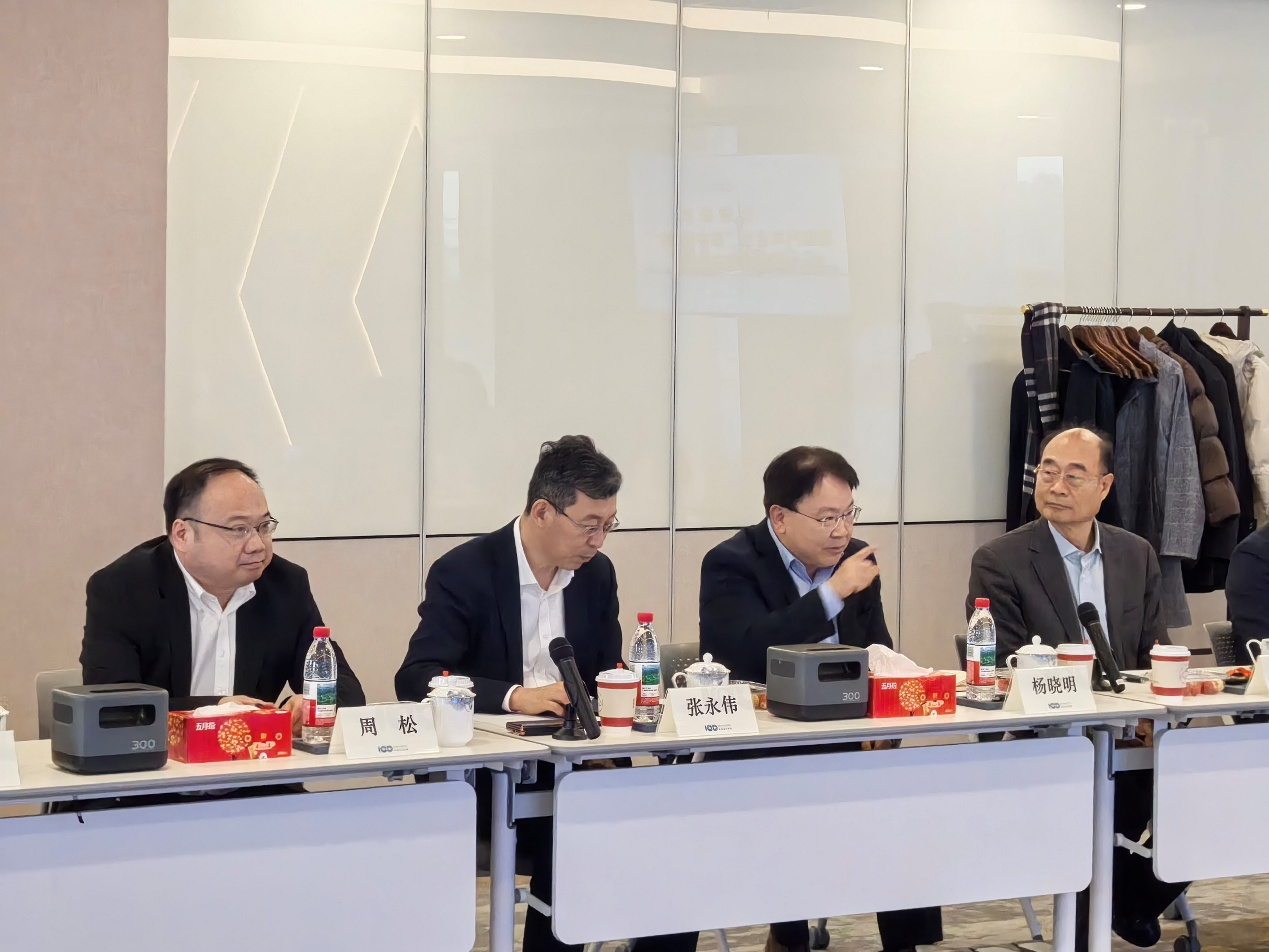
Yang Xiaoming, President of Aptiv China and Asia Pacific, noted that the era when China’s automotive industry built global competitiveness through labor cost and price advantages has passed. Today, China’s automotive manufacturing leads the world in intelligence, production efficiency and innovation capability. In the new round of China’s automotive industry internationalization, multinational automotive enterprises will fully tap into China’s local manufacturing strengths to fully support the export and overseas expansion of China’s automotive industry.
Zhou Song, President of Valeo China, pointed out that unlike general models, AI applied in China’s manufacturing industry is mostly small models with a stronger focus on practical implementation and application scenarios. This model has enabled AI to be widely adopted in core business processes such as R&D, production, technology and quality under the leadership of business units in China. As AI deeply integrates into all manufacturing links including R&D, production and quality control, China’s manufacturing strengths will grow increasingly prominent, with the gap with other countries expected to widen in the coming years.
The symposium stressed that the automotive industry must shift its focus from scale expansion to quality and capability enhancement. Enterprises can achieve sustainable development by boosting core capabilities in R&D, production, management and other key areas.
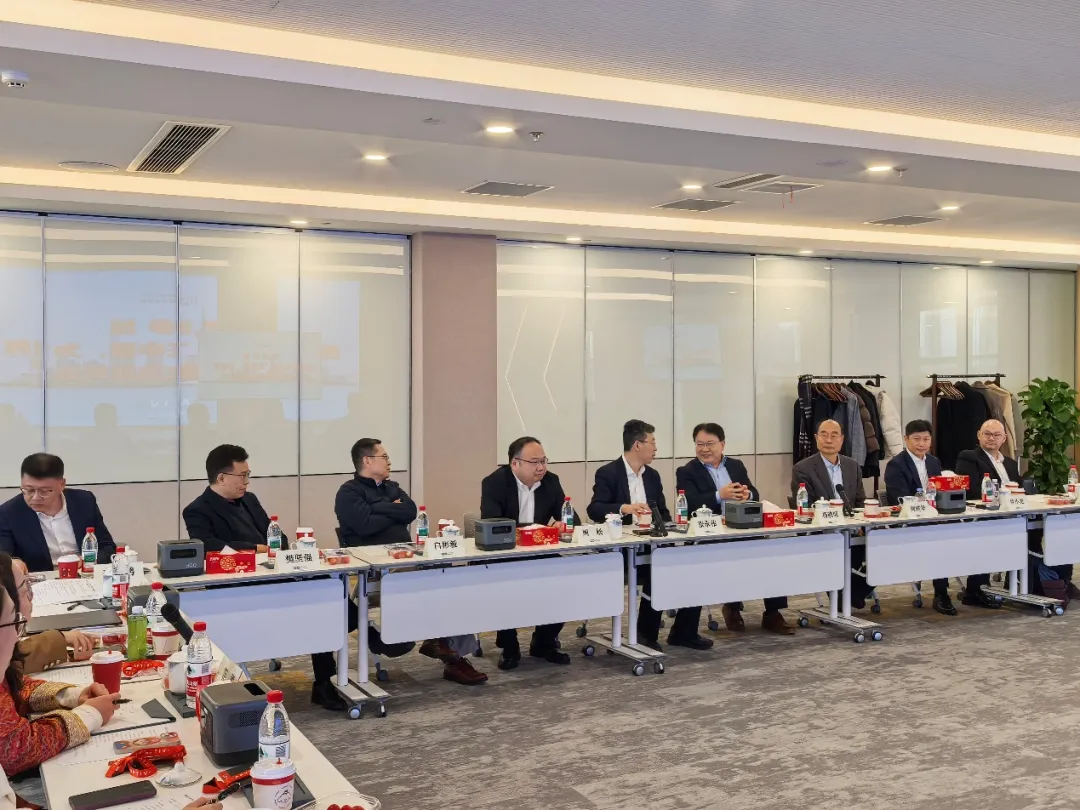
Zhong Xiaolong, Vice President of Infineon, stated that Infineon has set up several joint innovation and application centers with major OEMs and core auto parts enterprises. These centers conduct pre-research projects, which has greatly accelerated R&D iteration for Chinese vehicle models and raised enterprises’ comprehensive competitiveness. He believed multinational automotive enterprises should tap into China’s supply chain and technological strengths to speed up new product iteration in China and feed back to the global market. Meanwhile, they can provide stable supply, compliant services and rapid response for Chinese automakers’ overseas operations.
Bai Binyi, Executive Vice President of Electronics at Forvia Hella China and Member of Executive Board, pointed out that multinational enterprises in China face pressures from payment cycles and cost competition. Relevant government departments should raise product quality and compliance standards, and all enterprises must strictly follow relevant laws and standards. He suggested Chinese automakers adopt a cooperation model for overseas expansion, where partners complement each other’s strengths to explore overseas markets together—a process in which multinational automotive enterprises can play an important role.
Li Wenhao, President of Supply Chain Management and Sustainability at Autoliv China, said the current landscape brings both challenges and opportunities for multinational enterprises in China. Ever-stringent overseas regulatory and statutory requirements have prompted Chinese automakers to expand overseas with their original supply chains to ensure supply stability and product quality. With its mature global layout, Autoliv is well positioned to meet the overseas order demands of China’s automotive industry. He also mentioned that foreign-invested enterprises sincerely hope the government will strengthen post-mortem supervision—a measure that benefits not only foreign-invested enterprises but also serves as a strong safeguard for automotive consumers at large.
Fan Jianqiang, Former President of Marelli China, pointed out that multinational enterprises’ development in China has gone through three stages. The first is In the World, For China: foreign-invested enterprises succeeded in China by tapping into mature global mechanisms to meet local market demand, while also cultivating outstanding local talent. The second is In China, For China: some multinationals adjusted strategies actively to maintain market share in response to local market needs, while others saw market share decline due to insufficient understanding of the Chinese market and flawed strategic decisions. The third is In China, For the World, which poses greater challenges for multinationals. To succeed in the third stage, they need to upgrade their mechanisms and cognitive capabilities and avoid internal friction and competition. They should effectively separate overseas and Chinese businesses to boost decision-making efficiency, and fully tap into China’s supply chain, talent and technological strengths to strengthen cooperation with Chinese enterprises—for example, through setting up independent Chinese subsidiaries or establishing joint ventures to achieve mutual benefit and win-win results.
Xue Lihe, Head of Eldor Group China, believed the involution among Chinese enterprises will last at least three to five years, and multinationals need to make long-term preparations to address it. They can rely on China’s local capabilities for global product iteration and apply China’s strengths in AI technology, production factors and other areas to their global businesses—for instance, by setting up global R&D centers in China to serve the global market. In addition, they should focus on the incremental market brought by Chinese automakers’ overseas expansion, provide supporting services and act as accelerators for their globalization. At the same time, they can assist Chinese enterprises in developing alongside local overseas enterprises through more flexible and innovative cooperation models.
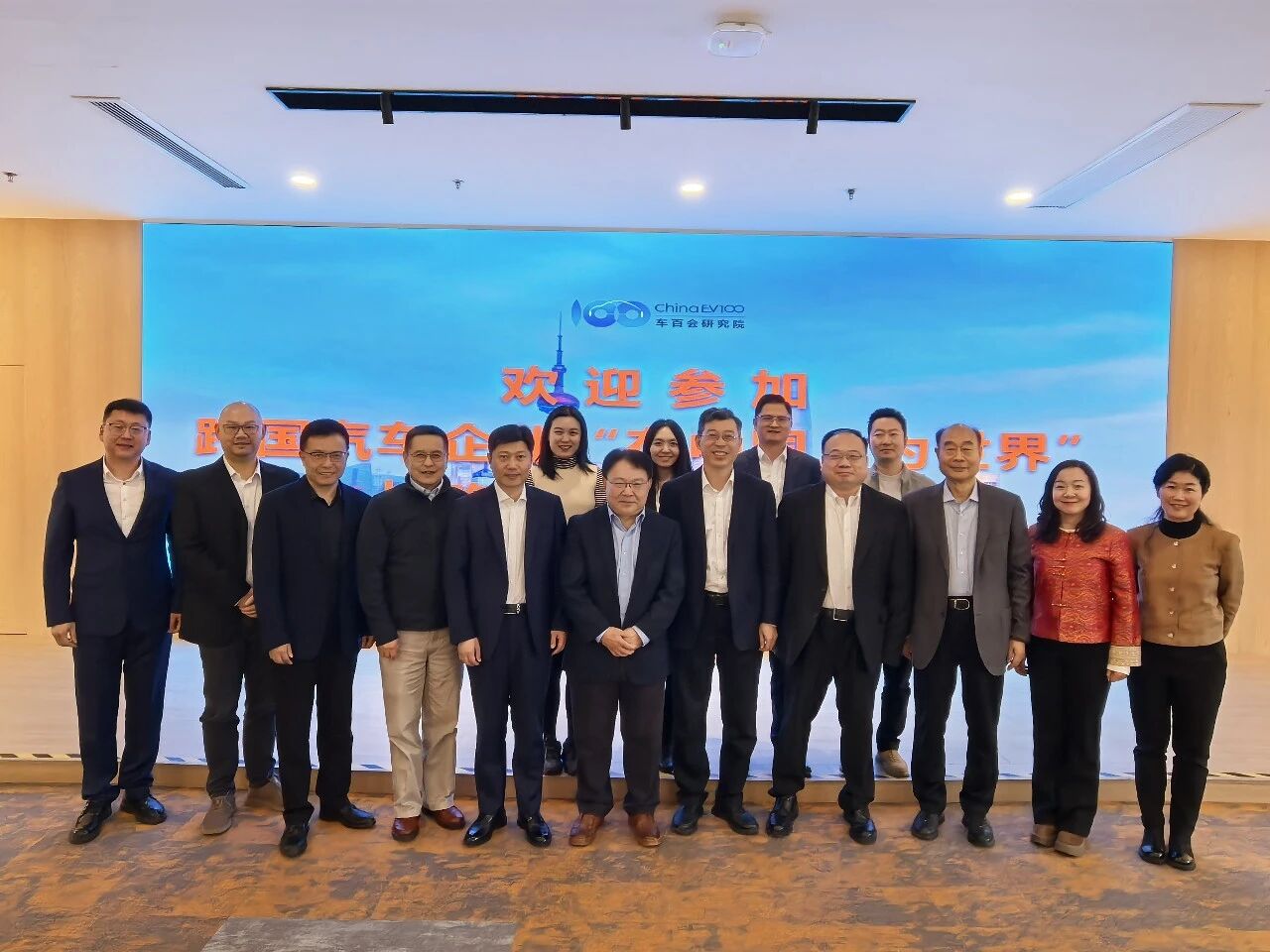
Zhang Yongwei in his concluding speech stated that China EV100 launched the M100 (High-Quality Development Platform for Multinational Automotive Enterprises in China) at the start of 2025, dedicated to providing more services and support for multinationals’ strategic transformation in China. In 2026, the platform will focus on four key work areas centering on the development and transformation of multinationals in China and their integration with China’s industrial chain. First, host a series of high-end seminars and organize in-depth thematic and sector-specific discussions to help enterprises solve practical problems. Second, launch the one-to-one exchange program, where the industry and multinational headquarters jointly discuss China’s policies, industry trends and enterprise development to further strengthen communication between multinational headquarters and China’s policy-makers, industry players and market entities. Third, launch the Global Automotive Enterprises Best Cooperation Practice Program, which will summarize multinationals’ development experience in China and provide more excellent case references for the industry. Fourth, promote closer cooperation between multinational supply chain enterprises and Chinese automakers. It will conduct pre-research projects via joint innovation centers and labs to accelerate technological R&D upgrading and actively attract multinationals to set up R&D centers in China.


