


On the afternoon of May 14, 2026, the "High-Level Closed-Door Meeting on Thailand's Automotive Industry Policies," co-hosted by the Thailand Board of Investment (BOI), China EV100, and the Global Renewable Energy and Electric Mobility (GREEM), was successfully held in Bangkok, Thailand. The meeting brought together enterprises from across the automotive industry chain with interest in investing in Thailand, and featured in-depth exchanges on core topics including BOI investment promotion policies and investment opportunities in Thailand's industrial estates.
As the third-largest economy in ASEAN, Thailand has a population of 71.6 million, a total GDP of USD 545 billion, and a per capita GDP exceeding USD 7,600. Thailand is a member of the Regional Comprehensive Economic Partnership (RCEP) and has signed 17 Free Trade Agreements (FTAs) with 24 countries, providing advantages for exports to Australia, New Zealand, Europe and North America. In 2025, the total value of foreign investment approved by the BOI reached 1.3 trillion baht (approximately RMB 280 billion), covering over 2,300 projects. From 2023 to Q1 2026, digital industries and automotive and auto parts have been the top two investment sectors in Thailand. In the automotive sector, automakers including SAIC, BYD, Great Wall Motor (GWM), Chery, Changan, and GAC Aion, as well as power battery companies such as Sunwoda, Gotion High-tech, CALB, and SVOLT Energy, have all established operations in Thailand. In terms of sources of foreign investment, China ranks as the second-largest source of foreign investment in Thailand after Singapore.
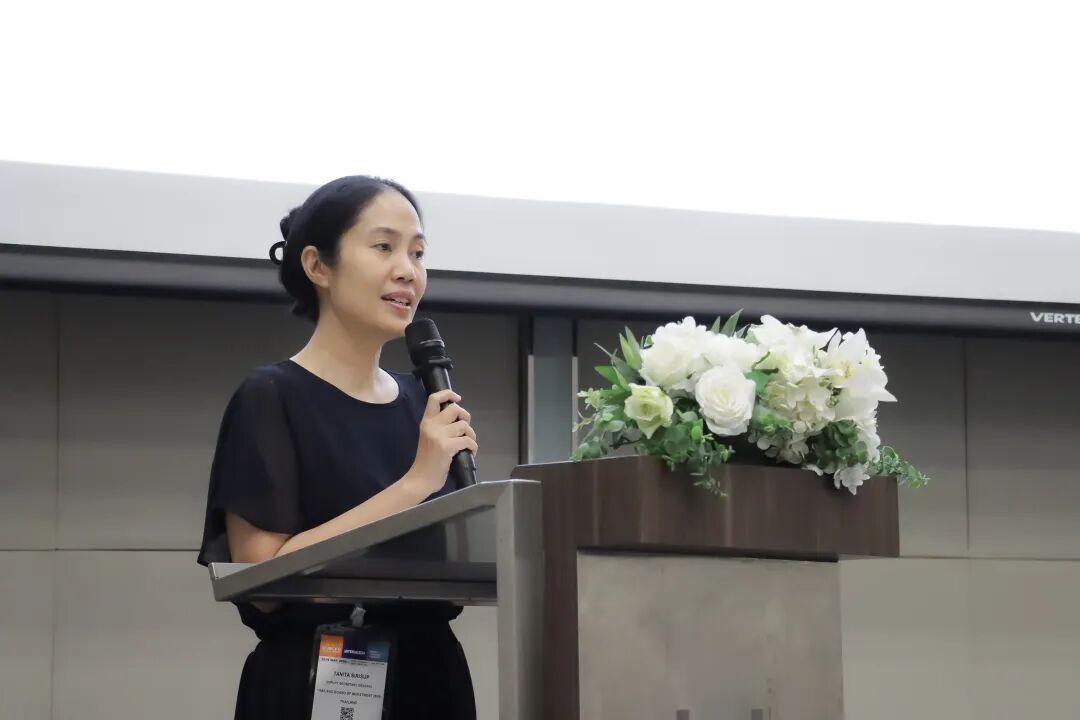
Ms. Tanita Sirisup, Deputy Secretary General of the Thailand Board of Investment (BOI)
Ms. Tanita Sirisup, Deputy Secretary General of the BOI, delivered the opening remarks, systematically presenting Thailand's support policies for the electric vehicle sector.

Ms. Anin Meksuksai, Executive Director of the Foreign Investment Marketing Division (BOI)
Ms. Anin Meksuksai, Executive Director of the Foreign Investment Marketing Division of the BOI, provided a detailed presentation on Thailand's current EV policies. On automotive electrification, Thailand established the National Electric Vehicle Policy Committee (EV Board) in 2020 and introduced the "30@30" target. From the EV3.0 policy (2022-2025) and the EV3.5 policy (2024-2027) to the MHEV incentive policy (2026-2032), Thailand has driven significant growth in EV penetration. BEV penetration increased from 1.1% in 2022 to 19.6% in 2025, reaching 27% in the first quarter of 2026 and surpassing HEVs to become the mainstream EV technology pathway for the first time. In addition, the BOI also supports the manufacturing and software and digital platform development for electric boats, three-wheeled EVs, electric buses and trucks, two-wheeled EVs, charging and battery-swapping stations, and e-bikes, creating opportunities for Chinese enterprises to empower Thailand's full-spectrum vehicle electrification.
The Thai government encourages high-end technology R&D in the country. In terms of policy incentives, the Thai government offers corporate income tax exemptions of up to 13 years (at a standard rate of 20%) for high-end technology R&D projects of varying levels, as well as exemptions on import duties for machinery, exemptions on import duties for raw materials used in manufacturing for export, and other non-tax incentives. Eligible power battery manufacturing projects may benefit from corporate income tax exemptions of up to 15 years. Although the current cost of manufacturing in Thailand is higher than in China, the adoption of standardized components can be shared to effectively reduce costs.
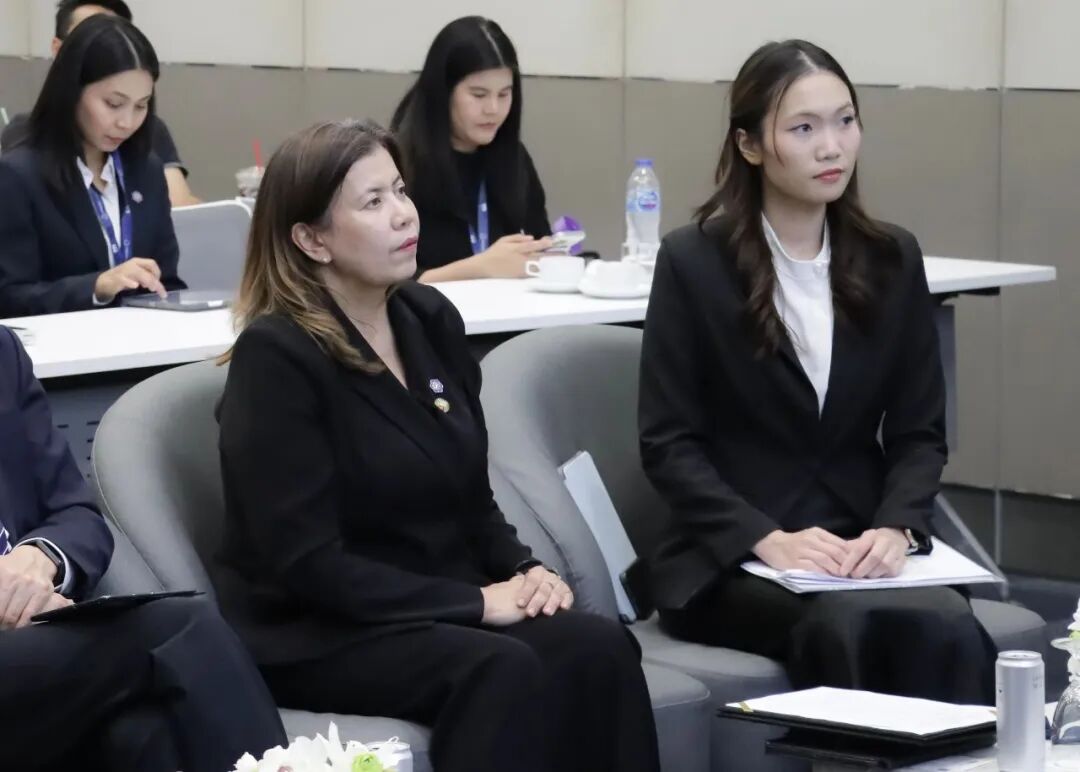
Dr. Nalinee Kanchanamai, Deputy Governor of the Industrial Estate Authority of Thailand (IEAT)
Dr. Nalinee Kanchanamai, Deputy Governor of the Industrial Estate Authority of Thailand (IEAT), introduced the support policies related to industrial estates in Thailand. The IEAT is a government agency under the Ministry of Industry responsible for the development, operation and management of industrial estates nationwide. At present, it manages 82 industrial estates (15 operated by IEAT itself and 67 jointly managed), hosting more than 5,700 factories. In terms of factory nationality, Japan, China and Singapore account for the highest shares at 23%, 17% and 10%, respectively. By industry, automotive and auto parts, steel and metal products, and electronic components account for the highest shares at 11%, 9% and 8%, respectively. In the automotive sector, Amata and WHA industrial estates manage over 1,000 integrated and auto parts companies, making them the preferred partners for automotive industry chain enterprises to develop in Thailand. In addition, with respect to land use and factory construction and operation permits, the IEAT approval cycle is approximately 40 days, compared to more than 90 days for non-IEAT locations.
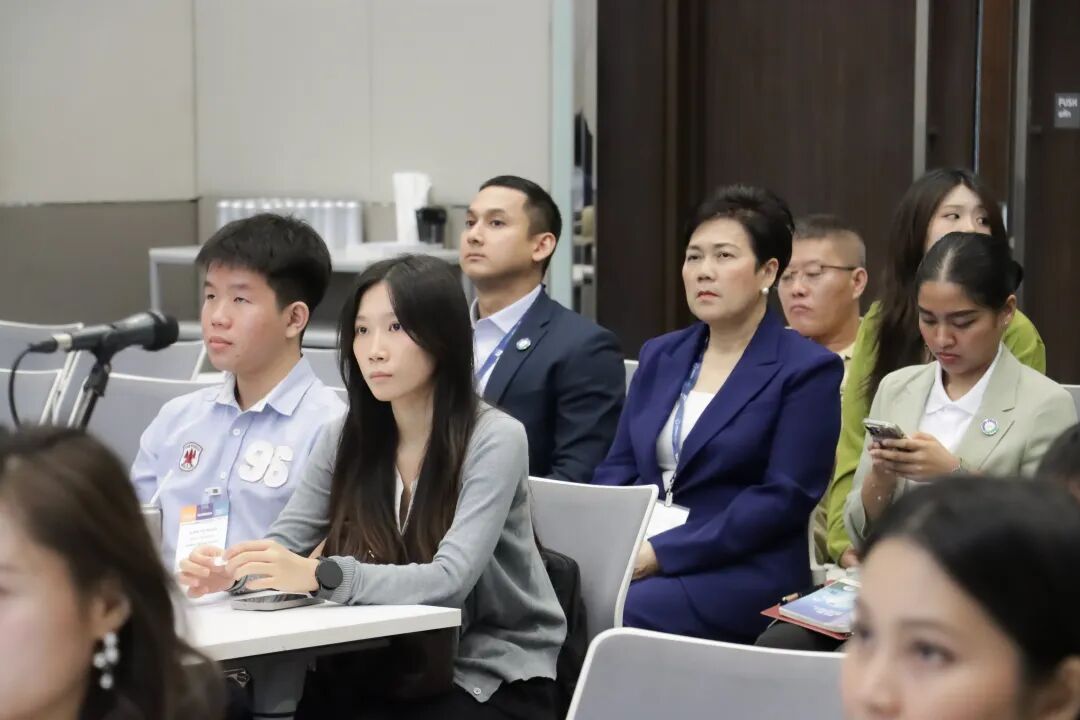
At this stage, Thailand encourages localized deployment of the EV industry chain through corporate income tax exemptions, tariff exemptions, non-tax incentives, and support for land purchase and factory construction. Notably, significant opportunities exist for Chinese enterprises in sectors such as two-wheeled EVs, three-wheeled EVs, electric buses and trucks. Going forward, China EV100 will continue to coordinate and facilitate exchanges between enterprises and Thai government agencies and industrial estates, supporting companies in their overseas expansion.
As an overseas expansion service platform for the automotive industry, China EV100 took the lead in organizing this meeting. Through comprehensive policy interpretations delivered by senior leaders from the BOI and IEAT, participating enterprises gained a deep understanding of Thailand's investment policies. During the Q&A session, numerous enterprises engaged in face-to-face discussions with senior government officials on their specific concerns regarding establishment in Thailand, laying the initial groundwork for future investment in the country.
China EV100 will continue to regularly connect enterprises with needs for investment in Thailand directly with senior Thai government officials, enabling them to access first-hand policy information to support their investment decisions.


