The integration of the automotive industry with AI will accelerate the application of AI and reshape the global competitiveness of China’s automakers. According to The Application and Development of AI Large Models in the Automotive Industry (hereinafter “the Report”) by EV100 Plus, AI large models are driving three core transformations in the Auto industry.
01 AI Large Models Drive Product Differentiation
As vehicle performance and intelligent driving capabilities become standardized, differentiation increasingly hinges on “fun” and “usability”—particularly user experience in interaction and services. With universal understanding abilities and years of advanced AI development, large models are transforming vehicles into content-rich with super intelligent agents that can “think” and “understand users.”
From “Transport Tool” to “Super Intelligent Agent”?
Driving: AI shifts intelligent driving from rule-based to data-driven end-to-end systems. Vehicles continuously collect environmental data, self-optimize, adapt to diverse conditions, and improve safety and comfort. Large models also generate training and simulation data, making cars easier to drive.
Cockpit: Vehicles gain the ability to understand voice and gestures, communicating via voice, lights, or screens. By combining generative large models with rule-based small models, they interpret explicit and implicit user intentions through multimodal perception, match relevant backend services, and deliver personalized experiences efficiently.
This shift meets diverse user needs, boosts satisfaction and user viscosity, reduces customer relationship costs, strengthens brand appeal, and elevates automotive intelligence.
02 From Using AI to Becoming AI-Driven Enterprises
AI large models redefine value across the entire vehicle lifecycle—not just during usage of vehicles, but in R&D, manufacturing, marketing, after-sales, and supply chains—driving digital transformation across the industry.
User relationships deepen: Large models act as direct traffic portals, enabling automakers to capture individual needs for demand analysis, product updates, and user operations, supporting personalized iterations. Some companies are building automated feedback loops for issue surveying, data processing, and engineering responses, improving efficiency and service quality.
Design and production evolve: Over 30% of software at automakers like Xpeng and NIO is now auto-generated by large models. These tools also offer a clear path for tech firms to empower automakers, accelerating convergence between AI, ICT, and the automotive industry.
The industrial cycle is shortening, with overlapping waves of innovation becoming the norm. As new changes emerge before prior ones conclude, the century-old auto industry has entered a new phase of competition and evolution.
03 Large Models Reshape the Industrial and Value Chain
Powered by computing, fueled by data, and amplified by algorithms, large models exhibit a Matthew effect—accelerating product evolution, enhancing intelligent productivity, and reshaping the automotive industrial and value chains.
1. Space in Vehicles as a Platform for Innovation
Vehicles with AI large models can offer personalized services like emotional interaction and safety management—catering to diverse user needs, boosting satisfaction, and helping brands stand out with a unique image. They also lower users’ learning cost for smart features, enhance user viscosity, reduce automakers’ costs to reach customers, and strengthen brand competitiveness.
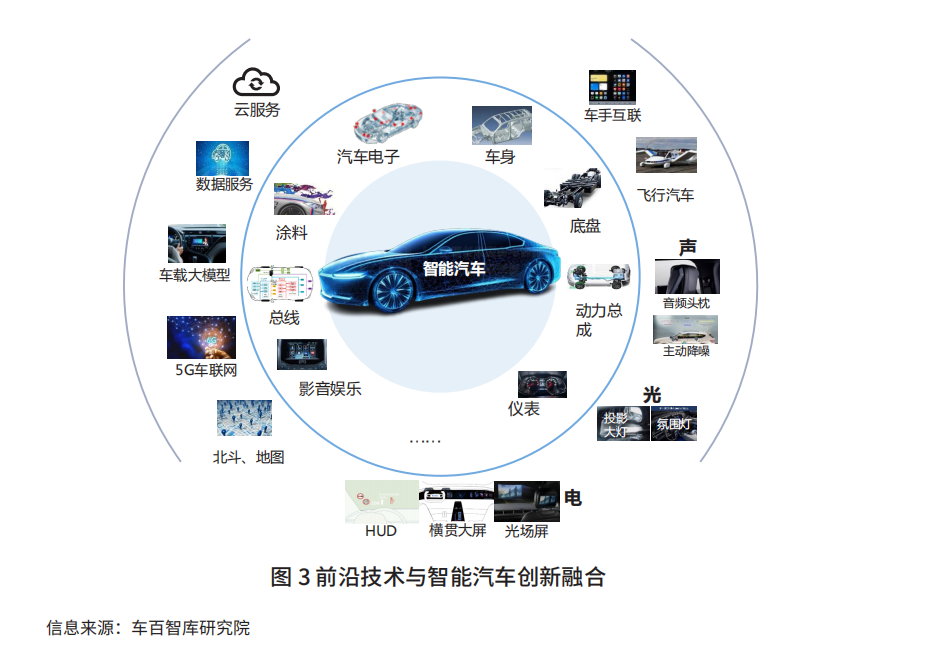
Meanwhile, vehicles boast stronger compatibility with cross-border tech (e.g., audio, visual, electronics). Function and technology innovation will build an underlying capability pool, integrating audio-visual, electronics, ICT, and other cross-border technologies to strengthen their role as cutting-edge tech integrators. Faster iterations of AI algorithms and models will speed up the adoption of new technologies. Large models even have the potential to become AI-driven Automotive Operating System (AOS), offering an opportunity for domestic AOS development.
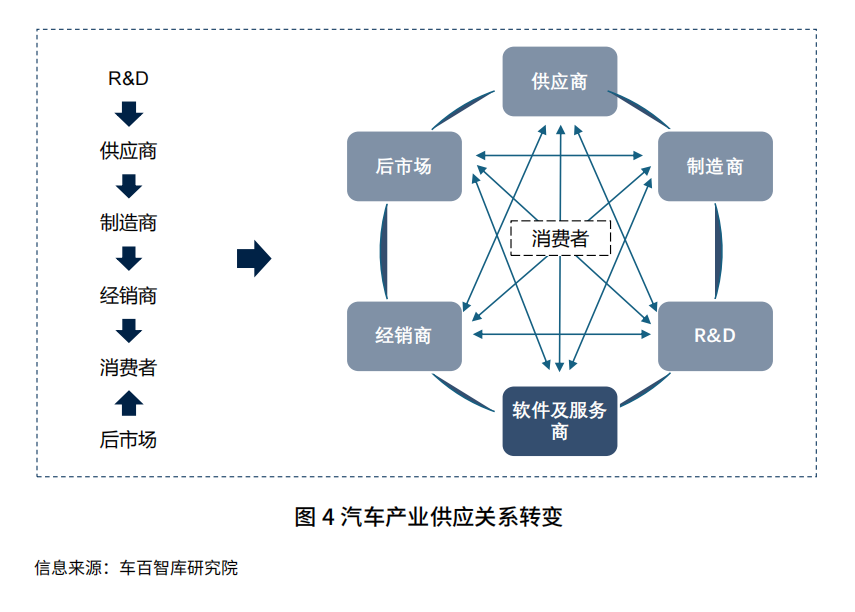
2. Reshape Industrial Relationships: From Supply-Demand Cooperation to Coordinated Cooperation
Vehicles AI large models are transforming into intelligent platforms with ongoing services and updates. This shift propels the industry toward greater intelligence, connectivity, personalization, and service focus, forming a more diverse and open ecosystem.
On one hand, partnerships between automakers, tech firms, software developers, and component suppliers will transcend traditional supply chains—becoming tighter, mutually beneficial coordinated collaborations. Stakeholders collaborate on innovative services, leverage traffic, and unlock data value to provide richer, personalized, seamless experiences. They also jointly respond to market competition, accelerating the building of a new ecologically collaborative supply and service system.
On the other hand, automakers can better understand and quickly address user needs. Users are no longer recipients but co-creators of automotive services and innovations, helping automakers build closer relationships and a more high-end, professional brand image.
Additionally, AI-intelligent vehicles endow smarter brains. The industry’s once fragmented supply chain is moving toward intelligent software-hardware integration, with individual enterprises even assuming multiple roles (e.g., software/hardware supplier, solution provider).
3. Expand the Value Chain: From Hardware Profit to Saling Data and Service
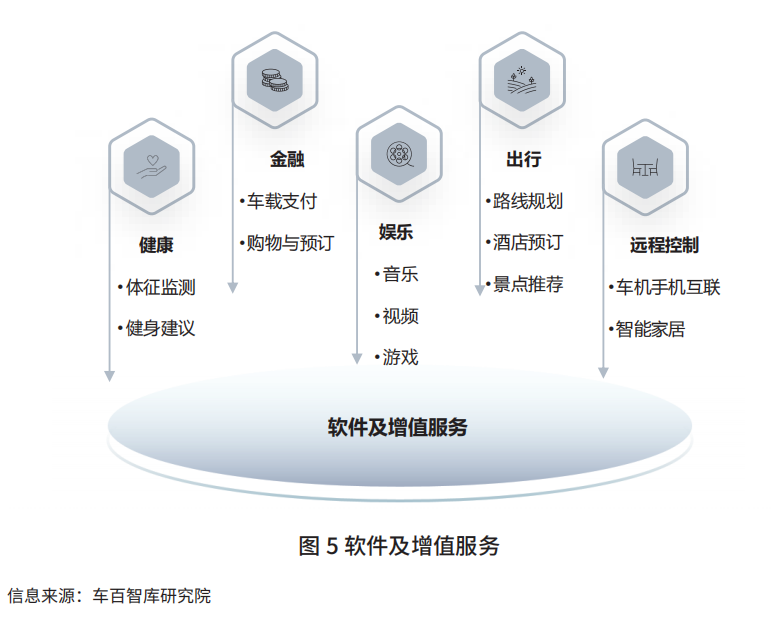
Powered by next-gen AI, vehicles will become mobile offices and entertainment hubs, offering scenario-specific personalized services. The leap development of intelligent experiences, driven by AI, is highly appealing to consumers—boosting demand for new-generation cars and emerging as a key purchase driver. These services meet consumers’ desire for high-tech and personalized features, maximize sensor function in vehicles and data value, and accelerate the exploration of “data + software subscription services.”
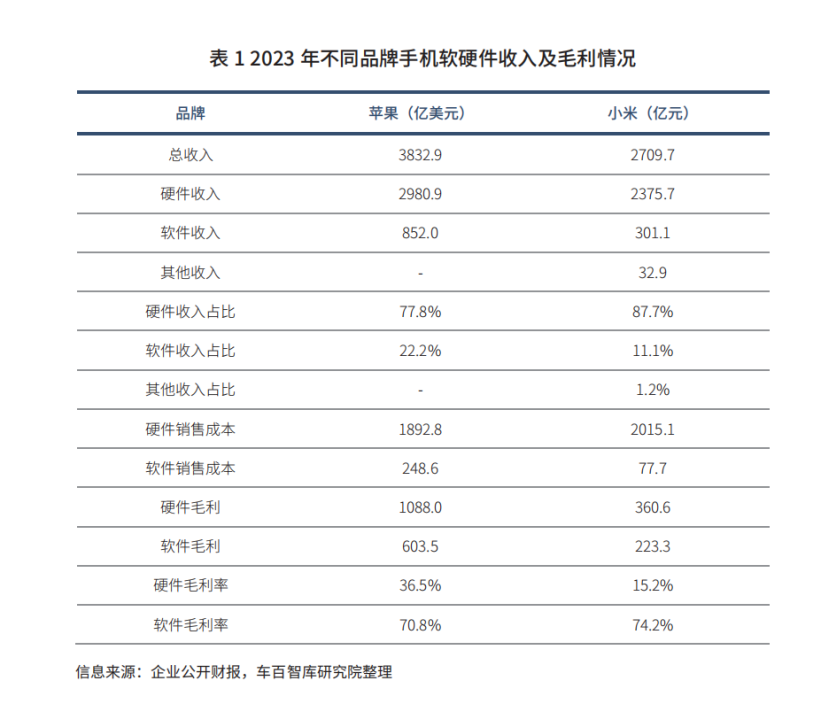
Software and its value-added services will create sustainable user engagement, reshaping the industry’s profit structure: shifting from hardware sales to software and internet value-added services, which could become a major profit source. While software margins won’t match smartphones, they could reverse the industry’s falling profitability. For example, Apple’s 2023 software and services revenue hit $85.2 billion (22.2% of total revenue) but contributed 35.5% of gross profit, thanks to over 70% software gross margins.